Home · Guides · How to build a race car, from the ground up
Guide · Preparation
How to build a race car, from the ground up
The right order to prepare a car — from the contact patch up to the engine — and why spending near the ground pays back more than spending on power.
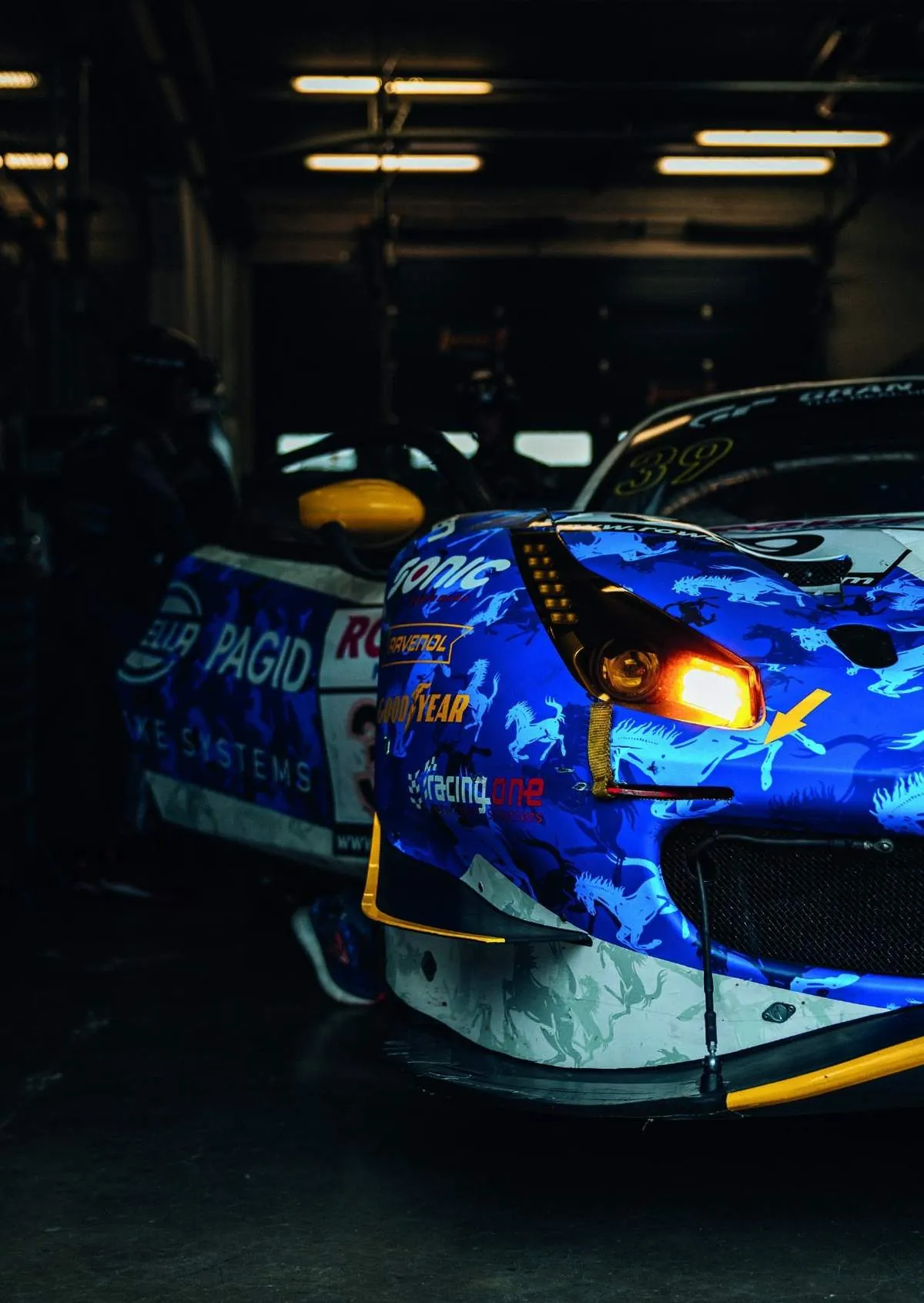
Most people start with the engine. It's the most expensive mistake in amateur motorsport. A race car is built from the ground up — starting at the only point that touches the road, the tyre — and every euro spent near the ground pays back more than the same euro spent on power. This guide shows the right order, from the contact patch up to the engine, with examples of cars you'll see on Iberian circuits and hillclimbs.
The principle: the closer to the ground, the more important
Everything the car does — accelerate, brake, turn — passes through four contact patches the size of your palm. Before thinking about horsepower, make sure those patches work well and that the car keeps them planted on the tarmac. The order of priorities follows distance from the ground: first the tyre, then the wheel, then how the suspension controls the wheel, and only much higher up the engine.
Golden rule: a light, balanced car with 130 hp is quicker (and more fun and safer) than a heavy, badly set-up car with 200 hp. Spend from the ground up.
1. Tyres — the most important thing of all
The right tyre for the right use changes the car completely. A mid-range road tyre overheats after two laps; a track tyre (semi-slick or slick, depending on the regulations) holds grip and temperature. Before spending on a single expensive component, get the tyre and pressures right — it's the cheapest change with the biggest effect on the clock.
Many track-day Civics go from understeering to neutral just with the right tyre and 0.3 bar less at the front when hot. Zero euros in parts, tenths per lap.
Read the dedicated guide: Tyres — choosing, pressures and temperature →
2. Wheels — lightness where it counts most
The wheel is unsprung mass: weight the suspension has to control on every bump. A lighter wheel improves traction, braking and comfort at once. Look for lightness with stiffness and the correct size/ET — a weak wheel flexes and ruins the geometry you worked so hard to set.
Competition programme and forged road lines, chosen with the right size, ET and centring for your car. We handle the fitment with you.
See wheels and suspension3. Suspension and geometry — controlling the wheel
A good tyre is useless if the wheel doesn't stay flat on the ground. This is where springs, dampers (adjustable coilovers) and, above all, geometry come in: ride height, camber and toe. Much of the gain comes from getting the geometry and corner weights right — not from spending more. Then the right damper for the use (road, track, hillclimb or rally) does the rest.
An excellent, cheap track base: with quality coilovers, negative camber at the front and a good set-up, an E36 balances beautifully without needing more power.
From road coilovers to Clubsport and competition dampers, including the classic programme for historic cars. Tell us the car and the discipline.
Request a suspension quoteRead the dedicated guide: Geometry & alignment — camber, toe and weights →
4. Bushings and mounts — the forgotten link
The best suspension in the world is lost on worn rubber bushings and subframes that move around. Replacing bushings with polyurethane or spherical joints and securing the subframes is cheap and transforms the car's precision — the steering starts to respond to the millimetre. It's the step almost everyone skips, and the one that separates a "dialled-in" car from a "vague" one.
Polyurethane bushings, drop links and mounts that give precision to the suspension you already have.
See accessories5. Brakes — stopping as well as going
With tyre, wheel and suspension making the car enter corners quickly, the brakes work far harder. The priority order for brakes is almost always the same: high-boiling-point fluid first, then pads suited to the temperature, discs in good condition and, for track, air ducting. Swapping the whole disc for an expensive kit is usually the last step, not the first.
Standard brakes already capable; with track fluid and pads they last whole sessions. Proof that the right choice is worth more than the most expensive.
Pads, fluid, discs, complete kits and ducting — specified for your use.
See brakesRead the dedicated guide: Brakes — pads, fluid and fade →
6. Weight — free power everywhere
Removing weight improves acceleration, braking, cornering and wear at the same time — and it starts for free. How, and in what order, without spending much, is in the dedicated guide.
Read the guide: Reducing weight without spending much →
7. Aerodynamics — balance, not style
A huge wing with a decorative lip at the front makes the car worse at high speed. The aerodynamics guide explains how to balance front and rear so the car actually improves.
Read the guide: Aerodynamics that works →
8. Cooling — cool what matters
Not everything needs an extra radiator. The cooling guide shows what to cool, in what order, and how to know if you really need an oil cooler.
9. Safety — it matters for everyone
This applies to any fast car, whether you do track, hillclimb or just a few circuit days: a good seat that holds you, a proper belt, an extinguisher within reach and a roll cage do more for your safety than any extra horsepower. Even without competing, the faster the car goes, the more safety counts — think about it at the same time as brakes and tyres, not afterwards.
If you're going to compete, there are specific rules: homologated equipment, expiry dates and paperwork the scrutineers check. We have a dedicated guide for that.
If you compete: guide to FIA homologation and FPAK scrutineering →
And the engine?
Last. Once the chassis already uses what it has well, power adds instead of complicating. A car that brakes, turns and grips well turns every extra horsepower into lap time; a bad car just gets harder to drive. Build from the ground up — the engine is the cherry, not the base.
Tell us the car, the discipline and the budget. We spec the right package, in the right order, and send a written quote.
Talk to usFrequently asked questions
Where should I start preparing my car?
At the contact with the ground: suitable tyres and correct pressures, then wheels, suspension and geometry, bushings, brakes, and only then weight, aerodynamics and the engine. It's the order that gives the most result per euro.
Is it worth increasing power first?
Rarely. A balanced car with less power is quicker and safer than a powerful, badly set-up car. Power should be one of the last steps, once the chassis can actually use it.
Which car is good to start with on track or hillclimb in Iberia?
Light, reliable bases with good parts support, such as the BMW E36, Honda Civic, Peugeot 205/206, Renault Clio or Porsche 944. What matters is the balance of the whole car, not the standard power.