Home · Guides · Reducing weight without spending much: where to start
Guide · Preparation
Reducing weight without spending much: where to start
The most cost-effective modification of all. The first tens of kilos come off for free — here's the right order.
Reducing weight is the most cost-effective modification of all. It doesn't just improve one thing — it improves acceleration, braking, cornering and tyre wear at the same time. And the first tens of kilos come off for free, with just a screwdriver and an afternoon's work. This guide gives the right order, from cheapest to most expensive.
Why weight is "free power"
Less mass is less inertia in everything the car does. But not all weight weighs the same: the most valuable to remove is weight that is high (worsens load transfer), at the extremities (increases inertia) and unsprung (wheels, brakes). Keep this idea — it will guide every decision.
Stage 1 — free: the interior
On a dedicated track or hillclimb car, almost all of the interior comes out. In order of ease and return:
- Rear seats — out in minutes, 10 to 20 kg.
- Carpet and sound-deadening — the bituminous sound-deadening material hides a lot of kilos; scraping it off can be worth 10 to 25 kg.
- Door cards and trim, mats, spare wheel and jack, sound system — another 15 to 30 kg added up.
Removing rear seats, carpet, sound-deadening and trim from an E36 easily takes off 40 to 60 kg without spending a cent — the car feels like a different machine straight away.
Safety note: removing weight is not removing structure. If you take out the passenger seat and go on track, many regulations require a homologated seat and harness and a roll cage. Never compromise stiffness or safety to save kilos.
Stage 2 — the battery: from lead to lithium
A lead-acid battery typically weighs 12 to 17 kg. An equivalent lithium (LiFePO4) battery weighs 2 to 4 kg — a saving of around 10 kg in one of the highest, most forward corners of the car, exactly where removing mass helps most. It's one of the best euro-per-kilo ratios after the interior.
- Mount the battery firmly and securely (regulations usually require it).
- Check your charger is lithium-compatible.
- Integrate the master cut-off required at scrutineering.
Light, reliable competition lithium batteries, with advice on mounting and the master cut-off.
See safety and interiorStage 3 — cheap, but with judgement
With the easy stuff done, the next steps cost more but still pay off:
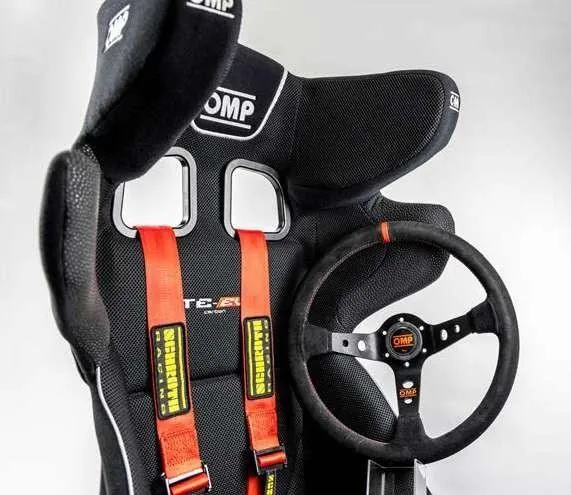
- Lightweight bucket seat — swaps a heavy standard seat for 6 to 10 kg less, lower and safer.
- Light wheels — remember: unsprung weight, worth double.
- Polycarbonate windows — light, but always check homologation and road legality.
- Lighter bonnet — removes weight that is high and forward.
Cars light from the factory: with the interior out, a bucket seat and light wheels they become absurdly agile. Proof that lightness beats power on small cars.
What NOT to do
Don't drill structural components to "save grams", don't remove airbags or belts without a homologated safety plan, and don't sacrifice body stiffness. Badly removed weight is dangerous and often slower — a car that flexes doesn't use the tyre.
We help you choose seat, harness, battery and the rest, in the right order and within your discipline's rules.
Talk to usFrequently asked questions
What's the cheapest way to remove weight from a car?
The interior: rear seats, carpet, sound-deadening material, trim, spare wheel and sound system. It all comes out with simple tools and can be worth 40 to 60 kg without spending anything on parts.
How much weight does a lithium battery save?
Typically around 10 kg — from 12–17 kg for a lead battery to 2–4 kg for a LiFePO4 — and in a high, forward corner of the car, where removing mass has the most effect.
Can I remove the passenger seat and belts for track?
Only carefully and within the regulations. In competition a homologated seat and harness and a roll cage are usually required. Never remove safety items without the equivalent homologated solution.