Home · Guides · FIA homologation and FPAK scrutineering: the practical guide
Guide · Competition
FIA homologation and FPAK scrutineering: the practical guide
This guide is for those who are going to compete — hillclimbs, circuit or rallies. If you only do track days or prepare the car for pleasure, you don't need this (but see the preparation guides). For those who compete: without homologated equipment and paperwork in order you won't pass scrutineering — here's what you need and what the scrutineers check.
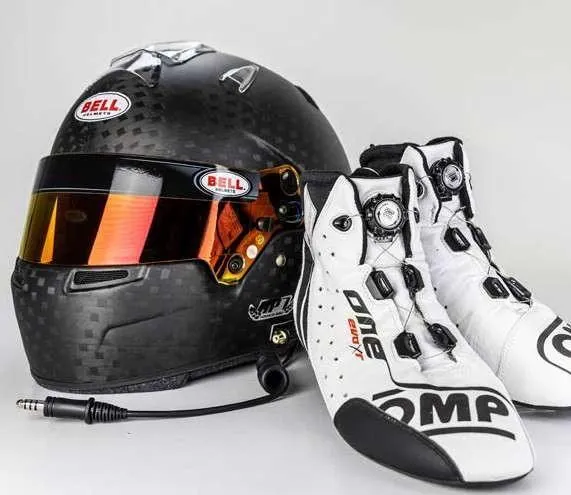
In Portugal, without homologated equipment and paperwork in order, the car simply fails scrutineering — and the penalty for a missing document is heavy. This guide explains, in plain language, what you need and what the scrutineers check. It's aligned with the FIA International Sporting Code (2026) and the FPAK 2026 technical regulations for the Portuguese Hillclimb Championship; even so, always confirm the norms and dates in force with the FPAK and with your championship's PGAK for your series and year, as they change often.
What homologation is and why it matters
Homologation is the process by which the FIA tests and certifies that a piece of equipment meets a safety standard. The approved product gets an official label (often with a hologram) bearing a homologation number and, in many cases, an expiry date. At scrutineering, it's that label — and the car's paperwork — that lets you take the start.
Driver equipment
- Helmet — to the FIA standards on the applicable technical lists (for example, the 8859 and 8860 families). In open-cockpit cars, visor/chin guard as required.
- Frontal head restraint (FHR/HANS) — FIA standard 8858, used with a compatible helmet.
- Suit, underwear, gloves, boots and balaclava — the current standard is FIA 8856-2018. The previous 8856-2000 remains valid, with a hologram, for a transition period — confirm the current deadline with the FPAK.
Suits, underwear, gloves, boots, helmets and FHR from competition brands — with the right homologation for your discipline.
See racewear & helmetsIn the car
- Harness — homologated competition belt, at least 5 points (often 6), FIA standard 8853-2016, installed per Art. 253-6 of Appendix J.
- Seat (bucket) — FIA-homologated competition seat. The 8855-1999 seats have a life limit from the date of manufacture; the more recent standards (8855-2021 and 8862, the latter with mounts) are more demanding and have their own validity. Always check the label and the current list in the FPAK Safety Equipment Table bulletin.
- Extinguisher — FIA-homologated extinguishing system (Art. 253-7 of Appendix J), manual and/or plumbed-in per the regulations and the FPAK Safety Equipment Table bulletin.
- Safety fuel tank — when required, an FT3 tank (or FT3.5/FT5). Mind the validity: a tank may not be used more than 5 years after the date of manufacture, unless recertified by the manufacturer for a period no longer than a further 2 years.
- Safety cage (roll cage) — homologated or built to Appendix J, with the corresponding certificate.
Homologated seats, harnesses, nets, extinguishers and cockpit accessories — within the rules.
See safety & interiorBeyond the equipment above, the 2026 Hillclimb technical regulations require, among others: a general anti-deflagration master switch (with the red spark symbol in a blue triangle), tow rings front and rear (yellow, orange or red), a red FIA-homologated rain light, side nets to FIA 8863-2013 on cars without side windows, roll-cage padding and a head restraint of at least 400 cm². There is also a noise limit of 110 dB/A. Confirm the version in force with the FPAK and your trophy's regulations.
Validity — the point that fails most
This is where many get caught at scrutineering. Several items expire, even in good visual condition: the 8855-1999 seats have a service life from manufacture; 8856-2018 suits are valid for about 10 years; harnesses carry a printed date. Check the labels and holograms before every season and replace anything out of date.
Tip: photograph all homologation labels (seat, harness, suit, helmet) with the dates. It saves time at scrutineering and avoids surprises on event day.
The paperwork
Beyond the equipment, at initial scrutineering the car must present the technical passport (FPAK, FIA or another ASN), the homologation form (for homologated cars), the completed safety forms (car and equipment) and the safety cage certificate with its seal. Practical note for hillclimbs: if you enter more than two events with a passport from another ASN or the FIA, you must request an FPAK technical passport. During the event, the seals (engine, gearbox, differential or turbo) must remain intact — tampering with them can lead to disqualification. A missing document brings a penalty, up to exclusion. Confirm the exact list with the FPAK.
Checklist before scrutineering
- Compatible, in-standard helmet + FHR.
- Homologated, valid suit, underwear, gloves, boots and balaclava.
- Harness within validity and correctly installed.
- Homologated seat, in date, with correct mounts.
- Extinguisher(s) and, if applicable, FT3 tank.
- Labels and holograms photographed.
- Homologation form, technical passport, forms and cage certificate.
Important: standards, technical lists and expiry dates change from year to year. This guide is a guideline — always confirm the version in force with the FPAK and your championship's regulations before buying equipment or entering.
We advise the right homologated equipment for your discipline and season, and handle the quote. Tell us what you need.
Talk to usFrequently asked questions
How long is an FIA competition seat valid?
FIA 8855-1999 seats have a life limit from the date of manufacture, even in good condition. The more recent standards (8855-2021 and 8862) have their own validity. Always check the label and confirm the deadlines in force with the FPAK.
Which suit standard do I have to use?
The current standard is FIA 8856-2018. The previous 8856-2000 remains valid, with a hologram, during a transition period. Confirm the current deadline with the FPAK, as these dates change.
How many years is an FT3 tank valid?
A safety fuel tank FT3 may not be used more than 5 years after the date of manufacture, unless recertified by the manufacturer for a period no longer than a further 2 years. Always check the date on the tank.
What do the scrutineers check?
Homologated, in-date equipment (helmet, FHR, suit, harness, seat, extinguisher) and the car's paperwork: homologation form, technical passport, safety forms and cage certificate. Missing documents can mean a fine or exclusion.