Home · Guides · Brakes for track: pads, fluid and fade
Guide · Preparation
Brakes for track: pads, fluid and fade
When the car enters corners fast, the brakes suffer far more. The right order — and why the brake sometimes disappears.
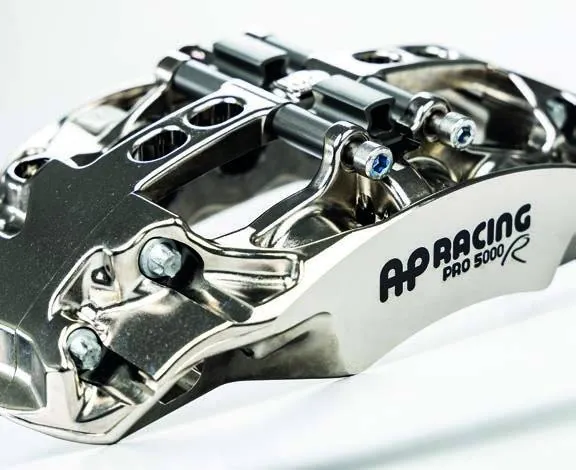
With good tyre, wheel and suspension, the car enters corners fast — and the brakes suffer far more than on the road. The good news: sorting brakes is done in order, from cheapest to most expensive. This guide explains that order, and why the brake sometimes 'disappears' mid-session.
The right order
Almost always the same sequence, cheapest to most expensive: high-boiling-point fluid, then pads suited to the temperature, discs in good condition and, for track, air ducting. Swapping everything for an expensive kit is usually the last step, not the first.
Brake fluid
It's the cheapest and the most forgotten. Under hard use, the fluid heats up and can boil — and vapour compresses, so the pedal goes to the floor without braking. Use a high-boiling-point competition fluid (quality DOT 4 / 5.1), bleed the system before every event and change it often: fluid absorbs moisture over time, which drops the boiling point sharply.
Pads: choose by heat
Each pad compound works well within a temperature window. A road pad brakes well cold but goes into fade when it heats up on track; a track pad needs heat and barely brakes cold — dangerous on the road. Choose the compound by the real temperature your brakes work at, not by the 'strongest' in the catalogue.
Many drivers keep two sets of pads: road pads for daily use and track pads fitted on arrival at the circuit. It's cheaper and safer than a compromise compound.
Fade: the brake that disappears
Fade is the loss of braking mid-session. There are three causes, and knowing them is half the fix: fluid boiling (pedal to the floor), the pad out of its window (overheated) and the disc saturated with heat. The cure is better fluid, the right compound and fresh air on the brakes.
Discs and ducting
Discs in good condition are enough for most; grooved or drilled ones help clear gases and water, but work no miracles. The cheapest gain on track is air ducting feeding flow to the brakes — it lowers temperature, protects fluid and pads and keeps braking consistent (see also the cooling guide).
Bedding-in
New pads and discs need to be bedded in: a series of progressive stops that lays an even layer of material on the disc surface. Done well, it avoids vibration and gets the most from the set. Always follow the pad maker's procedure.
Before every track day: bleed the brakes, check pad thickness and disc condition, and make sure there are no leaks. Brakes are safety priority number one.
Pads, fluid, discs, kits and ducting from AP Racing, Pagid, Ferodo and PFC — specified for the right temperature and discipline.
See brakesFrequently asked questions
Why does my brake pedal go to the floor on track?
Almost always it's the fluid boiling: vapour compresses and the pedal sinks without braking. Use a high-boiling-point competition fluid, bleed the system before every event, and change it often, since it absorbs moisture and loses effectiveness.
Can I use track pads on the road?
Not advisable: they need heat to brake and barely grip cold, which is dangerous day to day. The ideal is two sets — road and track — swapped on arrival at the circuit.
What is brake fade and how do I avoid it?
It's the loss of braking mid-session, from fluid boiling, an overheated pad or a heat-saturated disc. Avoid it with high-boiling-point fluid, the right pad compound for the temperature, and air ducting cooling the brakes.